How Modern Buyers Research Before Talking to Sales

How Modern Buyers Research Before Talking to Sales The way B2B buyers make purchasing decisions has changed dramatically over the last few years. Modern buyers no longer rely on sales representatives as their first source of information. Instead, they independently research solutions, compare vendors, read reviews, and consume educational content before engaging with any sales team. This evolution has completely transformed the B2B buyer journey. Today’s buyers are more informed, more selective, and more cautious about the decisions they make. They expect brands to provide valuable insights, educational resources, and personalized experiences long before a sales conversation begins. For businesses, this means traditional sales-first marketing strategies are becoming less effective. Companies that understand how buyers research can build stronger demand generation strategies, create more meaningful engagement, and improve conversion rates throughout the buyer journey. The Evolution of the B2B Buyer Journey The traditional B2B buying process used to be heavily dependent on direct sales interaction. Buyers often contacted vendors early in the process to: Learn about products Understand pricing Explore available options Request demonstrations Sales teams controlled most of the information buyers received. However, digital transformation has shifted control toward the buyer. Today, buyers can access information instantly through: Search engines Social media Industry websites Review platforms Educational content Webinars and videos As a result, buyers complete a large portion of their research independently before ever speaking with sales. This has made the modern B2B buyer journey longer, more research-driven, and more content-focused than ever before. Why Modern Buyers Prefer Self-Research Modern B2B buyers value independence during the purchasing process. They prefer to research privately because it allows them to: Understand problems more clearly Compare multiple vendors objectively Explore solutions at their own pace Avoid aggressive sales pressure Buyers now expect to be educated before they are sold to. Instead of immediately requesting demos or speaking with sales teams, they first seek answers to questions like: What problem am I trying to solve? Which solutions exist in the market? Which vendors are credible? What results can I expect? How much risk is involved? This self-education phase has become one of the most important parts of the modern buying process. The Key Stages of Modern Buyer Research Understanding how buyers research during the B2B buyer journey helps businesses create more effective marketing strategies. 1. Problem Awareness Stage The buyer journey often begins when businesses recognize a challenge or opportunity. At this stage, buyers are not searching for vendors yet. Instead, they are trying to understand: The nature of the problem Industry trends Possible risks Operational challenges During this phase, buyers consume educational content such as: Blog articles Industry reports Social media insights Podcasts Videos Brands that provide valuable educational content early can influence buyer perception from the beginning. 2. Solution Exploration Stage Once buyers understand the problem, they begin researching possible solutions. This stage involves: Comparing approaches Evaluating technologies Reviewing different methodologies Understanding implementation strategies Buyers actively search for: Case studies Whitepapers Webinars Product comparisons Best-practice guides This is where demand generation content becomes extremely important. Educational and solution-oriented content helps buyers gain confidence while positioning the business as a trusted authority. 3. Vendor Evaluation Stage After narrowing down possible solutions, buyers begin evaluating vendors. Modern buyers analyze: Company credibility Industry expertise Customer reviews Testimonials Product capabilities Pricing models At this stage, buyers often visit: Pricing pages Product pages About pages Customer success stories Repeated engagement with these pages usually signals strong buying intent. 4. Validation and Risk Assessment B2B purchases often involve multiple stakeholders and larger investments. Before making a decision, buyers evaluate: Security Compliance Scalability ROI potential Vendor reputation They may also involve: Finance teams IT departments Procurement teams Leadership stakeholders This stage often includes: Reference checks Demo evaluations Internal discussions Final vendor comparisons Businesses that reduce uncertainty during this stage improve their chances of conversion. The Role of Content in Modern Buyer Research Content has become one of the most powerful tools in the modern B2B buyer journey. Buyers rely heavily on content to educate themselves before contacting sales. Effective content helps businesses: Build trust Establish authority Demonstrate expertise Guide buyer decisions Types of Content Buyers Consume Educational Blogs Help buyers understand industry trends and challenges. Whitepapers Provide deeper insights into problems and solutions. Case Studies Demonstrate real-world success and outcomes. Webinars Offer educational discussions and expert guidance. Videos Simplify complex concepts and improve engagement. Comparison Guides Help buyers evaluate available solutions objectively. Each content type supports different stages of the buyer journey. Why Trust Matters More Than Ever Modern buyers are cautious. With so many vendors competing for attention, buyers prioritize brands they trust. Trust is built through: Consistent educational content Transparent communication Social proof Industry expertise Thought leadership Businesses that focus only on aggressive selling often lose credibility. Modern buyers respond better to brands that: Educate first Solve problems Provide value consistently This is why authority-driven marketing has become critical for modern demand generation. How Intent Signals Reveal Buyer Readiness Although buyers research independently, they leave behind valuable intent signals during the process. These signals help businesses identify prospects who may be moving closer to a purchase decision. Common buyer intent signals include: ✔ Repeated website visits✔ Pricing page engagement✔ Webinar registrations✔ Case study downloads✔ Email clicks✔ Multiple content interactions Businesses that monitor these signals can prioritize high-intent buyers more effectively. Why Sales and Marketing Alignment Is Essential The modern B2B buyer journey requires strong alignment between sales and marketing teams. Marketing helps: Educate buyers Create awareness Build trust Generate intent Sales teams then: Engage qualified prospects Personalize conversations Address objections Guide final decisions Without alignment, businesses risk: Poor buyer experiences Delayed follow-ups Weak conversion rates Modern demand generation succeeds when both teams work together around buyer intent and engagement data. Common Mistakes Businesses Make Many companies still struggle to adapt to modern buyer behavior. Common mistakes include: ❌ Selling too early❌ Ignoring buyer research behavior❌ Focusing only on lead volume❌ Publishing overly promotional content❌ Delayed follow-up on engaged buyers These mistakes reduce trust and
Read More

Demand Generation Trends 2026: AI, Buyer Behavior & Future Strategies

Demand Generation Trends 2026: AI, Buyer Behavior & Future Strategies Explore the top demand generation trends in 2026, including AI-driven marketing, changing buyer behavior, and proven strategies to generate high-quality leads and boost ROI. 🔥 Introduction: The Game Has Already Changed If you still think demand generation is about running ads and collecting leads, you’re already behind. In 2026, demand generation is no longer just a marketing function—it’s a revenue engine driven by data, personalization, and buyer intent. And here’s the reality:👉 Your buyers are smarter👉 Your competition is faster👉 And your old strategies? They’re fading So, what’s actually changing—and how can you stay ahead? Let’s break down the biggest demand generation trends shaping 2026. 📊 1. AI Is No Longer Optional—It’s Your Growth Partner AI isn’t just a buzzword anymore. It’s the backbone of modern demand generation. What’s changing: Predictive analytics to identify high-intent leads AI-powered content creation at scale Smart segmentation based on behavior, not demographics What this means for you: You’re no longer guessing who your ideal customer is—AI tells you exactly who is ready to buy. 👉 If you’re not using AI, you’re competing against businesses that are. 🧠 2. Buyer Behavior Has Shifted—And It’s Not Going Back Today’s B2B buyers don’t want to be sold to. They want: Value before contact Education before decision Trust before conversion The new buyer journey: 70–80% of research is done before they talk to sales They consume blogs, videos, and case studies silently They decide before you even know they exist What you should do: Stop chasing leads. Start building demand through insights. 📉 3. Lead Quantity Is Dead Quality Is Everything In 2026, more leads ≠ more revenue. Companies are now focusing on: High-intent prospects Better qualification processes Sales-ready leads instead of cold contacts The shift: Old mindset → “Get more leads”New mindset → “Get the right leads” 👉 A smaller, qualified pipeline will always outperform a large, unqualified one. 📢 4. Content Is the New Salesperson Your content is now doing the job your sales team used to do. Before a prospect talks to you, they’ve already: Read your blogs Seen your LinkedIn posts Compared you with competitors Winning content in 2026: Insight-driven (not promotional) Problem-solving (not product-focused) Consistent and value-packed 👉 If your content doesn’t educate, it won’t generate demand. 🔄 5. Funnels Are Being Replaced by Ecosystems The traditional funnel is too linear for today’s buyer journey. Instead, brands are building demand ecosystems: SEO + LinkedIn + Email working together Retargeting across multiple platforms Continuous engagement instead of one-time conversion What this means: Your buyer doesn’t follow a straight path—your strategy shouldn’t either. 📈 6. Personalization at Scale Is the New Standard Generic messaging is ignored. In 2026, personalization goes beyond “Hi [First Name]”. What’s working now: Behavior-based email campaigns Industry-specific messaging Dynamic website experiences 👉 The more relevant you are, the faster you convert. ⚡ 7. Speed Matters More Than Ever Timing is everything. If a prospect shows interest and you respond late—you’ve already lost them. High-performing teams: Use real-time intent data Automate follow-ups instantly Align marketing and sales for quick action 👉 The fastest brand often wins—not the biggest. 🎯 What This Means for You Let’s simplify it: In 2026, demand generation is about: Understanding your buyer deeply Delivering value before asking for anything Using AI and data to make smarter decisions Building trust at every touchpoint If you’re still relying on outdated tactics, you’re not just slowing down—you’re becoming invisible. 🚀 Final Thoughts: Adapt or Get Left Behind Demand generation isn’t getting harder—it’s getting smarter. And the brands that win are the ones that:✔ Educate instead of sell✔ Personalize instead of generalize✔ Optimize instead of guess The question is—where do you stand? Want to build a demand generation strategy that actually drives revenue? 👉 Follow Demanday for actionable insights👉 Or connect with us to turn your traffic into real opportunities
Read More

Best Email Marketing Ideas for 2025: Strategies to Elevate Your Campaigns

Best Email Marketing Ideas for 2025: Strategies to Elevate Your Campaigns Email marketing is the Orignel channel of digital marketing. While social media platforms rise and fall, email remains a constant, boasting a staggering ROI of 4200%. But in a landscape saturated with messages, how do you stand out and get your emails opened, read, and acted upon in 2025? This article helps you in the hottest email marketing trends predicted for 2025, arming you with the strategies to craft compelling campaigns that resonate with your audience. 1. Hyper-Personalization: Beyond the First Name Personalization has been the term of digital marketing for years, but in 2025, it is set to become more intricate and delicate. According to recent trends, hyper-personalization is leading the charge as the next border in email marketing. By leveraging advanced data analytics and machine learning algorithms, brands can analyze user behavior, preferences, and purchase history to craft highly personalized content For instance, AI-driven platforms can segment your audience by demographics, psychological profiles, and behavioral data. Emails that recommend products based on past purchases or suggest content tailored to an individual’s interests can significantly enhance open rates and click-through rates. A Data & Marketing Association study showed that personalized emails deliver six times higher transaction rates than generic ones, making the case for hyper-personalization even stronger in 2025. 2. AI and Automation: The Future of Content Creation Artificial Intelligence (AI) and automation are revolutionizing email marketing strategies. By 2025, expect to see the integration of AI-generated content in email campaigns. Platforms like OpenAI’s GPT-3 and others can assist in crafting engaging email copy that resonates with your audience, saves time, and reduces human error. Moreover, automation tools have matured, allowing marketers to set up complex workflows that respond to user behaviors in real time. For example, abandoned cart emails can be automated to trigger moments after a customer leaves the site without completing a purchase. These timely reminders are essential for recovering lost sales and improving conversion rates. 3. Mobile-First Approach: Prioritizing User Experience In 2025, optimizing email design for mobile viewing will be critical. This includes employing a responsive design that adjusts seamlessly to varying screen sizes and ensuring that content is easily readable and actionable on mobile devices. Recent research indicates that if an email does not render well on mobile, 80% of readers will delete it without opening it. For effective email marketing, an emphasis on concise subject lines, larger buttons for call-to-actions (CTAs), and minimalistic design can make a significant difference in user engagement. 4. Interactive Email Elements: Enhancing Engagement Static emails are going extinct.  In 2025, incorporating interactive elements such as carousels, embedded videos, and surveys will become commonplace. Interactive email features enable recipients to engage with elements directly within the email, which can lead to higher engagement rates. Data from Litmus indicates that including interactive elements in emails can increase click rates by as much as 73%. This trend not only improves user experience but also enhances storytelling, allowing brands to communicate more effectively and dynamically. 5. Privacy-Centric Email Marketing: Building Trust As data privacy continues to shape the digital landscape, understanding and implementing privacy-centric email practices will be crucial in 2025. Stricter regulations such as GDPR and CCPA have made consumers more aware of their data rights, prompting businesses to adopt transparent and ethical data collection practices. Implementing double opt-in methods, easy-to-locate unsubscribe options, and clear communication on data usage can help build trust with your audience. According to a survey by McKinsey, 86% of consumers are concerned about data privacy; thus, prioritizing transparency can significantly enhance brand loyalty and subscriber retention rates. 6. Advanced Analytics and Metrics: Measuring Success As we move towards 2025, adopting advanced analytics will be significant in understanding email marketing performance. Traditional metrics such as open rates and click-through rates still hold value, but marketers increasingly need to focus on more complex KPIs, such as customer lifetime value (CLV), engagement rates over time, and conversion paths. Email marketing is on an exciting trajectory as we head into 2025. By embracing hyper-personalization, AI and automation, a mobile-first approach, interactive content, privacy-centric practices, and advanced analytics, marketers can elevate their email strategies to new heights. As the digital landscape continues to change, staying ahead of these trends will ensure your brand remains competitive, engaged, and relevant in the eyes of consumers. Implementing these innovative ideas will not only enhance the effectiveness of email marketing campaigns but also foster deeper connections with your audience, resulting in sustained growth and success in the years to come. Leveraging recent data and predictive insights, your email marketing strategy can evolve to meet the challenges and opportunities that 2025 has in store.
Read More
B2B business

Why Your B2B Business Desperately Needs an Email Marketing Partner

Why Your B2B Business Desperately Needs an Email Marketing Partner In the fast-paced realm of B2B businesses, staying ahead of the competition is not just an advantage – it’s a necessity. As you navigate the complexities of modern marketing, one powerful tool emerges as a beacon of opportunity: email marketing. However, managing it all in-house can lead to challenges that hinder your growth. That’s where an email marketing partner comes into play. Today, we’ll explore why collaborating with an expert in email marketing can transform your approach and drive the results you’ve been striving for. The Power of Email Marketing in B2B You already know that email marketing remains one of the most effective channels for B2B communications. According to HubSpot, 93% of B2B marketers use email for content distribution, making it a central touchpoint in the marketing strategy. Yet, mere participation isn’t enough to ensure success. Crafting compelling emails that engage and convert prospects requires expertise, creativity, and strategy – elements that an experienced email marketing partner can provide. Why You Need an Email Marketing Partner Navigating the complexity of email marketing can be difficult. Are you leveraging segmentation properly? How effective is your content in driving engagement? What about A/B testing? By partnering with an email marketing expert, you gain immediate access to a wealth of knowledge and best practices in the field. These professionals are well-versed in the latest trends, tools, and techniques that can elevate your email campaigns to new heights. Did you know that, according to Validity, as much as 20% of your emails may never reach their intended recipients? This issue not only affects your engagement rates but can also tarnish your brand reputation. An eA partner in email marketing is aware of the nuances of deliverability and CAN-SPAM and GDPR compliance.  They implement strategies to ensure high open rates, helping you connect authentically with your audience while minimizing deliverability issues. In the B2B landscape, decisions should never be based on hunches alone; data must inform them. An email marketing partner utilizes analytics to assess campaign performance and make real-time adjustments. According to a report from Campaign Monitor, segmented email campaigns can generate up to 760% more revenue than non-segmented campaigns. Your partner will help you analyze key metrics and develop strategies to refine your approach continuously. As a business leader, your focus should be on scaling your operations, not getting bogged down by the nitty-gritty of email marketing. Partnering with an expert allows you to delegate this vital marketing function, freeing you and your team to concentrate on your core objectives. Instead of spending hours crafting emails or designing campaigns, you can focus on strategy and business growth. Every business is unique, and there’s no one-size-fits-all approach to email marketing. An experienced partner will work closely with you to understand your business objectives, customer persona, and market landscape. They can then craft email marketing strategies that align with your goals, whether that’s generating leads, nurturing prospects, or promoting your brand. In the world of B2B email marketing, content is king – but creativity is equally important. You might have an excellent product, but if your emails lack engaging content, they risk being overlooked. An email marketing partner can help you develop high-quality, targeted content that resonates with your audience. This increases brand credibility and trust in addition to increasing engagement. The need for email marketing in your business will grow with it. The transition from startup to scale-up can be overwhelming, especially when managing multiple campaigns. A partner can provide the necessary resources and infrastructure to seamlessly scale your email marketing efforts. They can create more sophisticated workflows, advanced automation, and tailored lead nurturing processes that adapt to your evolving business needs. Take the Leap In today’s digital-first world, the stakes have never been higher. With email marketing demonstrating an incredible return on investment (ROI) of $36 for every dollar spent, it’s clear that this channel is a goldmine for B2B businesses. However, maximizing the effectiveness of your email campaigns requires specialized knowledge and strategic execution. Partnering with an email marketing expert is not just a tactical decision – it’s a strategic move that can propel your business forward. If you’re ready to leverage the full potential of email marketing and unlock new growth avenues, consider finding a partner who understands your vision and can help turn your marketing goals into reality. So, are you ready to take the plunge? Embrace the benefits of having a dedicated email marketing partner by your side, and watch as your B2B business flourishes in the competitive landscape.
Read More
B2B Email Marketing

Your Complete B2B Email Marketing Campaign Guide: From Basics to Advanced Techniques

Your Complete B2B Email Marketing Campaign Guide: From Basics to Advanced Techniques Hey there! Are you ready to dive into the vibrant world of B2B email marketing? Whether you’re a newbie wondering how to start or a seasoned marketer looking to level up your email campaigns, you’ve landed in the right place! Email marketing is an incredible tool that allows businesses to connect, engage, and convert their audience, and I’m excited to guide you through every step of the process. Let’s roll up our sleeves and get started on your complete B2B email marketing campaign guide, from the foundational steps to advanced strategies that will make your campaigns shine! 1. Understanding the Basics of B2B Email Marketing What is B2B Email Marketing? First things first! B2B, or business-to-business, email marketing refers to the practice of sending emails from one business to another. This approach often focuses on building relationships, nurturing leads, and, ultimately, driving sales. Unlike B2C (business-to-consumer) emails, which target individual consumers, B2B emails are tailored to cater to professionals and organizations. Why is Email Marketing Important? Return on investment (ROI) is highest with email marketing. According to studies, for every  1spent, you can expect an average return of Not to mention, it allows for personalization, automation, and precise targeting, which can elevate your customer relationships to new heights. You’re losing out on a great chance to interact with your audience if you’re not using email marketing. 2. Setting Up Your Email Marketing Campaign Step 1: Defining Your Goals Before you start sending emails, you need to define what you want to achieve. Are you looking to nurture leads, boost sales, or increase brand awareness? Having clear objectives will shape your campaign’s strategy and content! Step 2: Building Your Email List Your email list is the lifeblood of your campaign. You can build it through various methods: Step 4: Selecting an Appropriate Email Marketing Platform  How do you pick the best platform when there are so many options available?  Look for features such as: Popular choices include Mailchimp, HubSpot, and Constant Contact! 3. Crafting Your Email Campaigns Step 4: Segmentation Segmentation is crucial in B2B email marketing. By dividing your email list into specific segments based on criteria like industry, job role, or engagement level, you can send targeted messages that resonate with each group. Higher open and click rates result in increased conversions! Step 5: Writing Compelling Emails Now comes the fun part – writing your emails! Here are some pointers to remember:: Step 6: Designing Eye-Catching Templates Your emails should not only be informative but visually appealing! Use templates that reflect your brand identity. Ensure they are responsive to different devices, as many users check their emails on mobile. 4. Implementing Advanced Strategies Now that you’ve mastered the basics, let’s explore some advanced strategies to improve your email marketing game and achieve even greater success! Step 7: A/B Testing A/B testing (or split testing) involves sending two variations of an email to determine which one performs better. You can test different subject lines, layouts, messaging, or send times. With this data-driven strategy, you can continuously optimize your marketing. Step 8: Automation and Drip Campaigns You can save time and ensure timely engagement with email automation. Create drip campaigns that automatically send a series of emails based on user actions or milestones. For instance, send welcome emails, follow-up sequences, or re-engagement messages to keep your audience’s interest alive. Step 9: Analyzing Performance and Adjusting Strategies To thrive in email marketing, analyzing your campaign’s performance is vital! Track metrics such as: Use this data to refine your future campaigns. Don’t be afraid to experiment, learn, and evolve your strategies! 5. Nurturing Your Leads and Building Relationships Step 10: Consistency is Key Consistency is vital. Create a regular cadence for your email campaigns – whether that’s weekly, bi-weekly, or monthly. Building familiarity with your audience strengthens relationships and keeps them engaged. Step 11: Providing Value Beyond Selling Your emails should only sometimes be sales-oriented. Share industry insights, relevant articles, and tips to provide value to your audience. This positions you as a trusted authority and keeps your brand top-of-mind when they’re ready to make a purchasing decision. Step 12: Asking for Feedback Don’t hesitate to seek feedback from your audience! Create surveys or invite them to reply to your emails with their thoughts. By interacting with them, you may further customize your content to meet their wants and demonstrate your concern for their ideas. Final Thoughts There you have it! Your complete B2B email marketing campaign guide is packed with essential tips and advanced strategies to elevate your marketing efforts. Stay up-to-date with trends, continuously test your strategies, and refine your approach to ensure ongoing success. Using this information, let your imagination go wild and create enduring connections with your audience right now. Happy emailing, and may your inbox overflow with success! 
Read More
B2B Email Marketing Services

Data-Driven Dominance: The Power of Analytics in B2B Email Marketing Services

Data-Driven Dominance: The Power of Analytics in B2B Email Marketing Services It is a dangerous gamble to rely just on trading in the competitive B2B market of today. You need data-driven insights to direct your email marketing approach if you want to succeed. Using analytics, you may turn your campaigns from simple sends into revenue-generating machines. Understanding Your Audience: The Cornerstone of Success Understanding your target audience is essential before delving into the analytics. By creating detailed customer personas, you can tailor your email content and campaigns to resonate with their specific needs and interests. This foundational step is essential for the success of any B2B email marketing strategy. Your Success Map: Key Performance Indicators (KPIs) To measure the effectiveness of your B2B email marketing campaigns, you need to track the right metrics. Key performance indicators (KPIs) such as open rates, click-through rates, conversion rates, and bounce rates provide invaluable insights into campaign performance. By closely monitoring these metrics, you can identify areas for improvement and optimize your campaigns for maximum impact. Unlocking Insights: Turning Data into Action Data alone is just information; it’s how you use it that matters. By leveraging analytics, you can unlock valuable insights that drive your B2B email marketing strategy. The Future of B2B Email Marketing Services As technology continues to evolve, the role of analytics in B2B email marketing services will only become more critical. By embracing data-driven insights and using them to inform your strategies, you can stay ahead of the competition and achieve long-term success. Although data is a potent weapon, how you use it is what counts. You can transform your B2B email marketing campaigns into revenue-generating powerhouses by combining data-driven insights with creativity and strategic thinking. Additional Tips for Success By applying these tactics and using analytics, you can reach unprecedented heights with your business-to-business email marketing and accomplish outstanding outcomes. Recall that although data is an effective tool, how you use it is what counts.  You can transform your B2B email marketing campaigns into revenue-generating powerhouses by combining data-driven insights with creativity and strategic thinking.
Read More
B2B Email

How to Integrate B2B Email into Your 2024 Marketing Strategy

How to Integrate B2B Email into Your 2024 Marketing Strategy Feeling like your B2B email marketing is stuck in the past? You’re not alone. In today’s digital marketing landscape, standing out in crowded inboxes requires a strategic and integrated approach. That’s where B2B Mail swoops in to save the day (and your open rates). But how do you seamlessly integrate BEmail with your overall marketing strategy for maximum impact? This guide will show you exactly how to transform your B2B email marketing from dull to dazzling in 2024. Why B2B Mail Belongs in Your B2B Marketing Arsenal (Stats Don’t Lie!) B2B email marketing remains a powerful tool, boasting a staggering ROI of $42 for every $1 spent. But with competition fiercer than ever, simply sending generic emails won’t cut it. B2B mail offers a suite of features designed to personalize, automate, and optimize your B2B email campaigns. Imagine nurturing leads with ease, providing communications that are specifically tailored to your desired clientele, and keeping a laser-like focus on your outcomes tracking.  That’s the B2B mail magic! Building the Bridge: Aligning B2B Mail with Your Marketing Goals Before diving into B2B mail’s functionalities, let’s ensure it aligns with your overall marketing goals. Here’s where some strategic planning comes in. Pro Tip: Leverage marketing automation platforms to segment your audience based on demographics, interests, and previous interactions. This personalization is key to B2B email success. Unleashing the Power of B2B Email: Key Features to Leverage Now, let’s explore how B2B mail empowers you to craft high-performing B2B email campaigns: Remember: Don’t just send emails; tell compelling stories! mail empowers you to craft engaging content that educates, entertains, and ultimately converts your audience. The Winning Formula: Integrating B2B Mail with Other Marketing Channels For a truly powerful B2B marketing strategy, integrate B2B mail with your other marketing channels. Here’s how: By creating a cohesive ecosystem between B2B Email and your other marketing channels, you’ll create a powerful lead-nurturing machine that drives results. Are you prepared for a 2024 email marketing revolution in B2B? Embrace BEmail’s functionalities, integrate it with your overall marketing strategy, and watch your lead generation and sales soar!
Read More
Email

How to Introduce Yourself in an Email in Every Situation

How to Introduce Yourself in an Email in Every Situation Email remains a critical battleground for professional communication in today’s social media platforms. However, with inboxes overflowing (a recent Radicati Group study suggests professionals receive an average of 125 emails daily) and attention spans dwindling, crafting an introductory email that cuts through the noise can feel like an uphill battle. Fear not, fellow wordsmiths! This guide delves into the secrets of composing an email introduction that lands smoothly, sparks genuine connection, and (dare we say it?) even compels the recipient to hit “reply.” Hook ‘Em from the Start: Crafting a Compelling Greeting First impressions matter, and your email greeting sets the tone for the entire interaction. The virtual handshake establishes rapport or, if poorly executed, leaves the recipient feeling like they’ve just received a spam email. Pro Tip: Personalization is key! A little effort in tailoring your greeting goes a long way in establishing rapport. Did you find a recent article they wrote insightful? Mention it! Briefly But Brilliantly: Introducing Yourself with Impact Once you’ve secured their attention with a captivating greeting, it’s time to introduce yourself. However, resist the urge to launch into your life story! Remember: Keep your introduction concise and focused. Aim for 2-3 sentences that pique the recipient’s interest and encourage them to learn more. Think of it as your professional elevator pitch – short, impactful, and leaving them wanting more. Craft a Clear Call to Action: Guiding the Conversation Forward A strong call to action (CTA) tells the recipient what you’d like them to do next. This could be anything from scheduling a call to learning more about your services on your website, or simply replying with their thoughts. Keep in mind: A strong CTA doesn’t have to be pushy. It’s simply an invitation to continue the conversation and establish a mutually beneficial connection. Beyond the Basics: Tailoring Your Introduction for Specific Situations While the core principles remain the same, tailoring your introduction to the specific situation can further enhance its effectiveness. Cold Emails (Done Right): Acknowledge the cold nature of your email upfront, but then showcase the value you can offer. Perhaps you have a case study showcasing success in their industry, or a unique perspective they may not have considered.
Read More
seo

Conquer the Search Engine Jungle: Your Guide to SEO Services

Conquer the Search Engine Jungle: Your Guide to SEO Services Feeling lost in the vast wilderness of search engines? Want your website to be the oasis thirsty web searchers stumble upon? Look no further! This tutorial will show you how SEO services work and how they can change the way people see your website. 1. Cracking the Code: What Exactly Are SEO Services? Think of Search Engine Optimization as the secret language search engines speak. By optimizing your website with relevant keywords, clear structure, and user-friendly content, Search Engine Optimization services help search engines understand what your website is about and rank it higher in search results. The higher your ranking, the more likely potential customers are to find you – simple as that! Here’s the Shocking Truth: Over 63% of web traffic comes from organic search That’s a massive audience you’re missing out on if your website isn’t optimized for search engines. 2. Why Invest in SEO Services? It’s More Than Just Rankings! Search Engine Optimization services offer a treasure trove of benefits beyond just climbing the search engine ladder. Here’s a glimpse of the gold you can unearth: 3. Unveiling the SEO Service Toolbox: What Do They Do? A variety of tactics are included in Search Engine Optimization services, such as: 4. Finding Your SEO Sherpa: Choosing the Right SEO Services The world of SEO can be complex. That’s where professional Search Engine Optimization services come in. They act as your guides, navigating the ever-changing Search Engine Optimization landscape and ensuring your website stays optimized for success. Here are some tips for choosing the right Search Engine Optimization service provider: 5. The Future of Search Engine Optimization: Staying Ahead of the Curve Search Engine Optimization is a continuous effort as opposed to a quick fix. Search engine algorithms are constantly evolving, so the best Search Engine Optimization services are adaptable and stay up-to-date on the latest trends. You can make sure your website stays visible and relevant in the ever-evolving digital market by working with an accomplished Search Engine Optimization provider. Ready to unlock the power of Search Engine Optimization and watch your website climb the search engine ranks? Embrace SEO services, and get ready to conquer the online world!
Read More
Data Cleansing

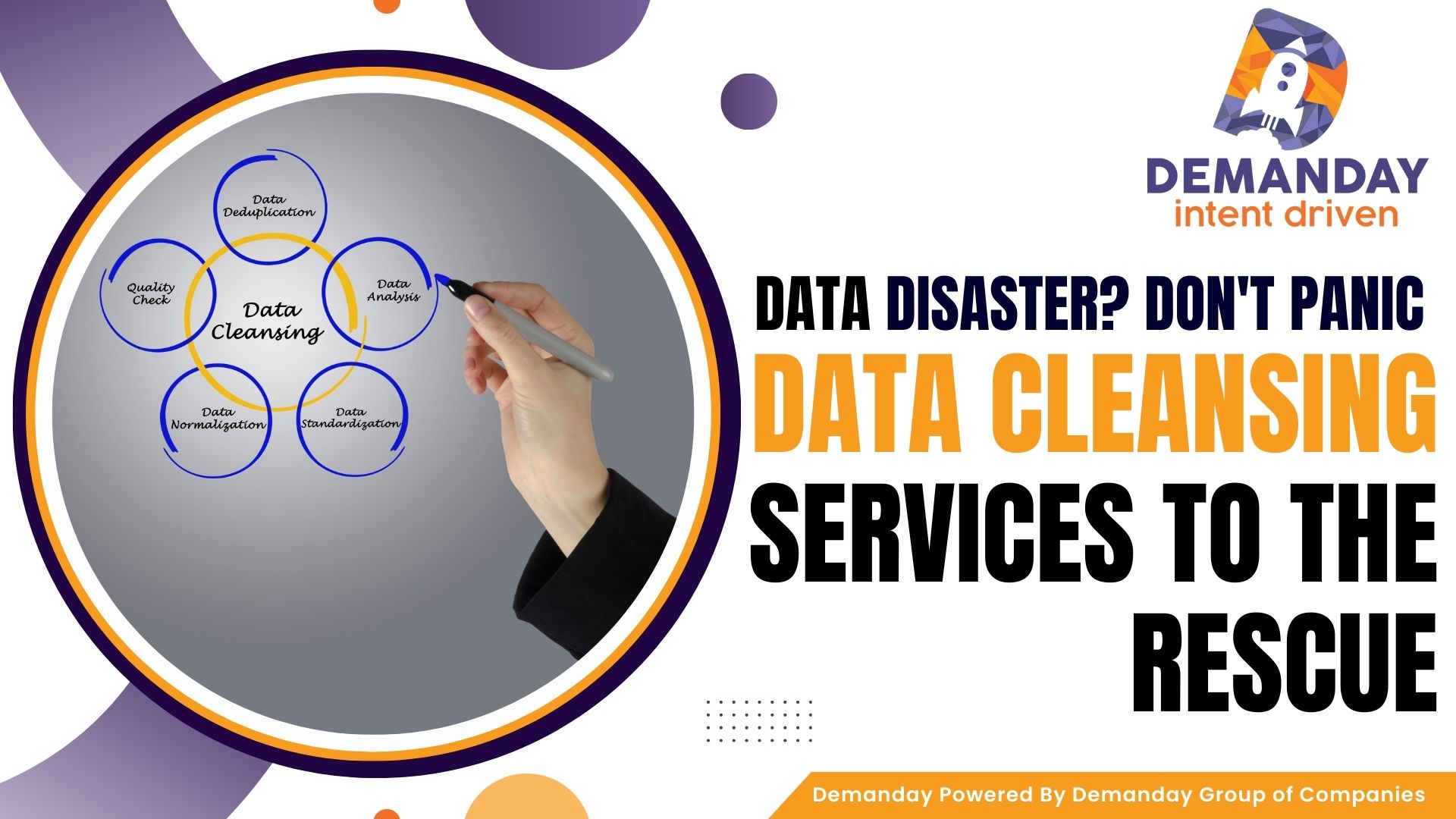
Data Disaster? Don’t Panic! Data Cleansing Services to the Rescue

Data Disaster? Don’t Panic! Data Cleansing Services to the Rescue Ever felt like your data is more of a monster than a masterpiece? You’re not alone. A whopping 40% of businesses, report experiencing data quality issues. Missing information, typos, duplicates – these gremlins can wreak havoc on your marketing campaigns, business decisions, and even customer relationships. But fear not! Data cleansing services are here to be your data superheroes! From Messy to Marvelous: What is Data Cleansing? Data cleansing is the process of scrubbing your data squeaky clean. It entails locating and updating old information as well as flaws and discrepancies. Think of it as giving your data a spa day – it emerges refreshed, revitalized, and ready to work its magic! Why Clean Data Matters: Big Benefits for Your Business Clean data is like having a crystal ball for your business. Here’s why data cleansing matters: What Gets Cleaned? Unveiling the Data Cleansing Process Data cleansing services typically address a range of issues: Choosing the Right Data Cleansing Service: Your Perfect Match With so many data cleansing services out there, how do you choose the right one? Consider: Embrace the Power of Clean Data: A Brighter Future for Your Business By investing in data cleansing services, you’re investing in the future of your business. Clean, accurate data is the foundation for smarter decisions, stronger customer relationships, and ultimately, a thriving business. So, don’t let dirty data hold you back. Embrace the power of data cleansing and watch your business soar!
Read More

Subscribe to our newsletter

Sign up to receive latest news, updates, promotions, and special offers delivered directly to your inbox.
No, thanks