Why Leads Aren’t Converting: Fix These Lead Conversion Problems in 2026

Why Leads Aren’t Converting: Fix These Lead Conversion Problems in 2026 Struggling with lead conversion problems? Discover why your leads aren’t converting and how to fix funnel gaps, messaging issues, and improve your demand generation strategy. 🔥 Introduction: The Real Problem Isn’t Sales If your leads aren’t converting, your first instinct might be to blame your sales team. But here’s the truth:👉 Most conversion problems start before sales even gets involved. In 2026, your buyers are already making decisions long before they talk to anyone. So if conversions are low, the issue is likely hidden in your funnel and messaging—not your salespeople. Let’s uncover what’s really going wrong. 📉 1. You’re Attracting the Wrong Audience Not all leads are good leads. If your messaging is too broad, you’ll attract: People who don’t need your solution People who can’t afford it People who were never going to convert The problem: You’re optimizing for volume, not relevance. The fix: Define your Ideal Customer Profile (ICP) clearly Use targeted content instead of generic messaging Focus on high-intent traffic 👉 Better leads = easier conversions. 🧠 2. Your Messaging Isn’t Connecting You might be getting attention—but not interest. Why? Because your messaging is: Too product-focused Too generic Not aligned with real pain points What your buyers actually want: They want to know: “Can you solve my problem?” “Do you understand my situation?” “Why should I trust you?” The fix: Shift from:❌ “Here’s what we offer”✅ “Here’s how we solve your problem” 👉 If your message doesn’t resonate, your leads won’t convert. 🔄 3. Your Funnel Has Hidden Gaps A typical funnel looks smooth on paper—but in reality, it’s full of leaks. Common funnel gaps: No clear next step after content Weak or confusing CTAs No nurturing between touchpoints Long delays in follow-up What happens: Leads lose interest, get distracted, or choose a competitor. The fix: Map your entire user journey Add strong, clear CTAs Automate follow-ups Keep engagement consistent 👉 Every gap in your funnel is a lost opportunity. 📢 4. You’re Not Building Trust Early Enough In 2026, trust is everything. Your leads won’t convert unless they believe:✔ You understand them✔ You’ve helped others like them✔ You can deliver results What builds trust: Case studies Testimonials Educational content Consistent brand presence The mistake: Waiting until the sales call to build trust. 👉 By then, it’s already too late. ⏳ 5. You’re Too Slow to Respond Speed is a silent deal-breaker. If a lead shows interest and: You respond hours (or days) later You don’t follow up properly They’ve already moved on. The reality: The first brand to respond often wins. The fix: Use automation tools for instant responses Align marketing and sales teams Track intent signals in real time 👉 Timing can make or break conversions. 📊 6. You’re Not Nurturing Your Leads Not every lead is ready to buy immediately. But if you don’t nurture them—you lose them. What most brands do: Capture a lead Send one email Stop following up What you should do: Create email sequences Share valuable insights regularly Stay top-of-mind 👉 Conversion happens over time, not instantly. ⚠️ 7. You’re Measuring the Wrong Metrics If you’re only tracking: Number of leads Website traffic You’re missing the bigger picture. What actually matters: Conversion rate Lead quality Cost per acquisition Revenue impact 👉 More leads don’t matter if none convert. 🎯 What’s Really Causing Your Lead Conversion Problems? Let’s simplify it: Your leads aren’t converting because: You’re attracting the wrong people Your messaging isn’t resonating Your funnel has gaps You’re not building trust You’re too slow or inconsistent And none of that is your sales team’s fault. 🚀 Final Thoughts: Fix the System, Not the People If you want better conversions, stop blaming outcomes—and start fixing inputs. In 2026, winning brands:✔ Focus on quality over quantity✔ Communicate value clearly✔ Build trust before selling✔ Optimize every stage of the funnel Because when your system works…👉 Conversions follow naturally.   Struggling with lead conversion problems? 👉 Follow Demanday for actionable demand generation insights👉 Or connect with us to turn your leads into real revenue

Read More
Website

Elevate Your Website: Simple Tricks for Enhanced User-Friendliness

Elevate Your Website: Simple Tricks for Enhanced User-Friendliness Making your website user-friendly is a good idea and a requirement in the rapidly evolving digital world. A seamless user experience keeps visitors engaged and encourages them to return. In this article, we’ll explore simple yet effective tricks you can implement to enhance the user-friendliness of your website. Whether you’re a seasoned web developer or just starting, these strategies will ensure that your site attracts visitors and retains them. Understanding the Importance of User-Friendliness Before diving into the tricks, let’s quickly recap why user-friendliness is crucial. According to recent statistics from the Nielsen Norman Group, 94% of first impressions are design-related. This means that if your site’s design is not intuitive or visually appealing, visitors are likely to leave before they even explore your content. Furthermore, a study by HubSpot indicates that 76% of consumers say the most important factor in a website’s design is its ease of use. If you want to retain your audience, your website’s usability is key. 1. Optimize Navigation for Ease of Use Your website’s navigation plays a vital role in its user-friendliness. It should be easy for users to find what they’re looking for. The following advice will improve navigation: 2. Improve Loading Speeds User patience is limited when it comes to web page loading times. Research by Google reveals that 53% of mobile site visitors will leave a page that takes longer than three seconds to load. To enhance speed: 3. Embrace Mobile Responsiveness Since mobile devices account for more than half of all web traffic, your website must be responsive. There will be over 1 billion 5G connections worldwide by 2025 To ensure your site is mobile-friendly: 4. Utilize Clear Call-to-Actions (CTAs) Clear and compelling CTAs guide users in taking the actions they desire, whether it’s signing up for a newsletter, making a purchase, or contacting your team. Here’s how you can strengthen your CTAs: 5. Enhance Content Readability Content is king, but it won’t retain visitors if it’s not readable. According to a study by the Nielsen Norman Group, users typically only read about 20% of the content on a page. To maximize engagement: 6. Make Accessibility a Priority Creating an accessible website shows that you care about all users, including those with disabilities. In the U.S., approximately 1 in 4 adults have some form of disability, according to the CDC. Here’s how to improve accessibility: Conclusion Enhancing your website’s user-friendliness is an ongoing process that requires attention to detail and the willingness to adapt to user needs. By implementing these simple tricks—optimized navigation, improved loading speeds, mobile responsiveness, clear CTAs, readable content, and accessibility—you not only enhance user experience but also significantly boost your site’s performance and retention rates. With these actionable tips, you can create a website that not only captivates visitors but also transforms them into loyal users. Remember, a user-friendly website is a successful website, and the journey toward improvement begins with you. Take these insights and apply them to your projects today, and you’ll undoubtedly see positive changes that resonate with your audience. Happy developing!
Read More
B2B lead database

Tapping the Value of Your B2B Lead Database: 2024 Optimization Techniques

Tapping the Value of Your B2B Lead Database: 2024 Optimization Techniques Your B2B lead database is a goldmine of potential customers. But without proper optimization, it’s like having a buried treasure without a map. It’s time to unlock the full potential of your lead database and turn those contacts into loyal customers. Why B2B Lead Database Optimization Matters Your B2B lead database is a treasure trove of potential customers, but like any valuable resource, it requires regular maintenance. Data cleansing, often called data scrubbing, is detecting and correcting or removing inaccurate, incomplete, incorrectly formatted, duplicated, or otherwise erroneous data. It’s the digital equivalent of spring cleaning for your business. Data Cleansing: Spring Cleaning for Your Lead Database You should regularly spring clean your lead database, just like you would your physical area. Outdated and accurate information can help your marketing efforts. Here’s how to breathe new life into your database: Enriching Your Lead Profiles: A robust lead profile provides valuable insights into your potential customers. Here’s how to add to your database of leads: Lead Scoring: Prioritize Your Focus Not all leads are created equal. Implementing a lead scoring system helps you prioritize your efforts and focus on the most promising opportunities. Here’s how to do it: Leverage Automation for Efficiency Automation can significantly boost your lead database management efficiency. Consider using tools to: Continuous Optimization and Analysis Your lead database is a living entity. It requires constant monitoring and optimization. Here’s how to ensure its effectiveness: Following these strategies will transform your B2B lead database into a powerful asset that drives sales and fuels your business growth.
Read More
Data Cleansing

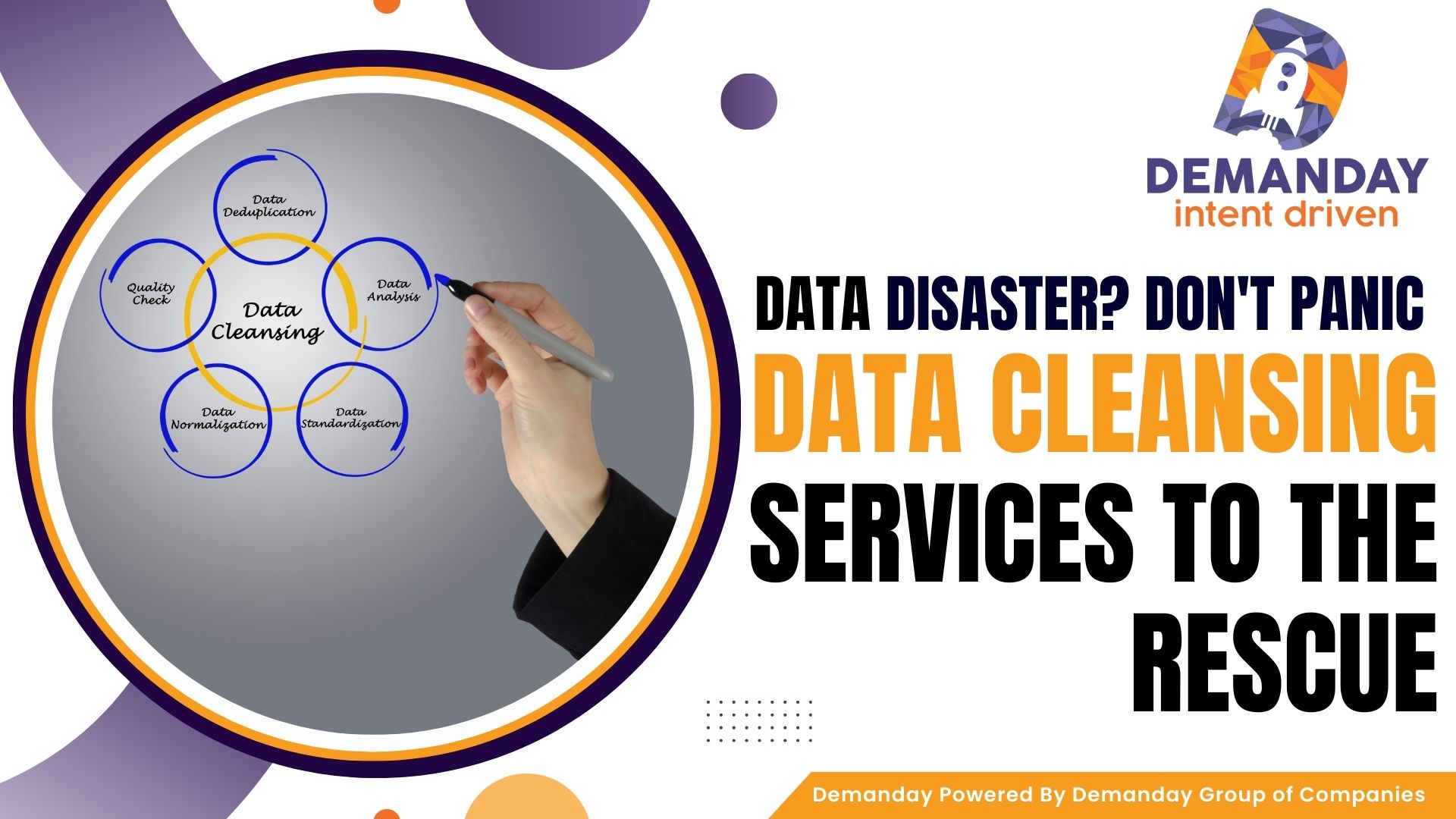
Data Disaster? Don’t Panic! Data Cleansing Services to the Rescue

Data Disaster? Don’t Panic! Data Cleansing Services to the Rescue Ever felt like your data is more of a monster than a masterpiece? You’re not alone. A whopping 40% of businesses, report experiencing data quality issues. Missing information, typos, duplicates – these gremlins can wreak havoc on your marketing campaigns, business decisions, and even customer relationships. But fear not! Data cleansing services are here to be your data superheroes! From Messy to Marvelous: What is Data Cleansing? Data cleansing is the process of scrubbing your data squeaky clean. It entails locating and updating old information as well as flaws and discrepancies. Think of it as giving your data a spa day – it emerges refreshed, revitalized, and ready to work its magic! Why Clean Data Matters: Big Benefits for Your Business Clean data is like having a crystal ball for your business. Here’s why data cleansing matters: What Gets Cleaned? Unveiling the Data Cleansing Process Data cleansing services typically address a range of issues: Choosing the Right Data Cleansing Service: Your Perfect Match With so many data cleansing services out there, how do you choose the right one? Consider: Embrace the Power of Clean Data: A Brighter Future for Your Business By investing in data cleansing services, you’re investing in the future of your business. Clean, accurate data is the foundation for smarter decisions, stronger customer relationships, and ultimately, a thriving business. So, don’t let dirty data hold you back. Embrace the power of data cleansing and watch your business soar!
Read More
marketing strategy

AI is Revolutionizing My Marketing Strategy (and Yours Too!)

AI is Revolutionizing My Marketing Strategy (and Yours Too!) Remember those late nights fueled by caffeine and wild marketing ideas scribbled on whiteboards? Don’t get me wrong, creativity is still king, but the digital marketing strategy is undergoing a serious transformation.  Enter AI-powered martech, and prepare for your marketing strategies to get much smarter (and way more efficient!). Drowning in Data? AI Throws You a Lifesaver. Marketers today are swimming in a sea of information – social media analytics, website traffic reports, customer surveys… the data overload is real. But what if you could use all this data to personalize your marketing efforts with laser precision? That’s where AI comes sailing in like a knight in shining armor. Recent studies (2024) show a whopping 87% of marketers believe AI will significantly impact their marketing strategies in the next five years. AI can analyze mountains of data, uncovering hidden patterns and trends that would leave even the most seasoned marketing guru scratching their head. AI: Your Superpower for Personalized Marketing Strategy and Beyond So, how exactly does AI transform your digital marketing strategy?  Become a Personalization Pro: Imagine crafting email campaigns or social media ads that speak directly to each customer. AI can analyze their past behavior and preferences to deliver targeted messages that truly resonate. A study (2024) found that 72% of consumers only use brands that personalize their messages. Talk about connecting with your audience! The Human Touch: Still Essential (Phew!) While AI is undeniably powerful, it’s important to remember it’s a tool, not a replacement for human creativity and intuition. The best marketing strategies leverage the power of AI alongside human expertise. You bring the creative vision, and AI provides the data-driven insights to bring it to life. Ready to Dive into the AI Marketing Revolution? The rise of AI in Martech isn’t just a fad; it’s the future of digital marketing. By incorporating AI tools and strategies, you can unlock a new level of efficiency, personalization, and campaign performance. So, ditch the endless brainstorming sessions and embrace the exciting world of AI-powered marketing.  The results might just surprise (and delight) you! Bonus Tip: Explore free or freemium AI marketing tools available online to experiment and see how AI can supercharge your marketing efforts. Get ready to say goodbye to marketing guesswork and hello to marketing magic!
Read More

Evolving Dynamics of the Global Advertising Industry to Meet Data Privacy Expectations

Evolving Dynamics of the Global Advertising Industry to Meet Data Privacy Expectations In the ever-changing landscape of the global advertising (AD) industry, staying abreast of the latest trends is imperative. Today, we delve into the transformative journey this industry is undertaking to align with evolving data privacy expectations, navigating the intricacies of a digital world that demands a delicate balance between personalization and protection. Understanding the Shifting Paradigm The Data Privacy Imperative In an era marked by heightened awareness of data privacy concerns, advertisers find themselves at a crossroads. The conventional approach of leveraging vast amounts of user data for targeted campaigns is encountering resistance due to growing privacy expectations. Users are increasingly conscious of how their data is used, demanding transparency and control. Regulatory Influences Global data protection regulations, notably GDPR and CCPA, have reshaped the advertising landscape. Adapting to these regulatory frameworks is not merely a legal requirement but a strategic imperative for advertisers aiming to build trust with their audiences. Non-compliance not only poses legal risks but also jeopardizes brand reputation. Navigating the New Normal Embracing Privacy-Centric Technologies To thrive in this era of heightened data privacy expectations, advertisers are turning to privacy-centric technologies. Innovations such as Privacy-Preserving Machine Learning and Federated Learning enable advertisers to glean valuable insights from user data without compromising individual privacy. These technologies mark a departure from conventional data collection methods, ensuring a more ethical and responsible approach. Contextual Targeting Reimagined As the era of third-party cookies comes to an end, advertisers are reimagining contextual targeting. Focusing on the context of user interactions rather than individual user data, this approach ensures personalized advertising without infringing on privacy. Advertisers are leveraging semantic analysis and natural language processing to understand user intent and deliver more relevant content. The Role of Transparency in Building Trust Communicating Data Practices Building trust with users requires clear and transparent communication about data practices. Advertisers are recognizing the importance of crafting easily understandable privacy policies and consent forms. This not only ensures legal compliance but also fosters a sense of trust among users, contributing to a positive brand image. Opt-In Strategies Moving beyond obligatory consent checkboxes, advertisers are adopting proactive opt-in strategies. Providing users with meaningful choices regarding data usage builds a sense of empowerment and control. Advertisers are increasingly focusing on creating compelling value propositions to encourage users to willingly share their data. Future-Proofing Advertising Strategies Diversification of Channels With the evolution of data privacy expectations, advertisers are diversifying their advertising channels. Relying solely on traditional digital platforms may no longer suffice. Advertisers are exploring emerging channels such as Connected TV Advertising and In-App Advertising, offering new avenues for reaching audiences while respecting their privacy. Personalization through Collaboration The future of advertising lies in collaborative personalization. Advertisers are collaborating with platforms, publishers, and even competitors to create a unified approach to user personalization. This collaborative model allows for shared insights while ensuring privacy compliance. Conclusion In conclusion, the global advertising industry is undergoing a profound transformation to meet the data privacy expectations of a more conscientious audience. From embracing privacy-centric technologies to reimagining contextual targeting and prioritizing transparency, advertisers are adapting their strategies for a privacy-focused future.
Read More
IT industry 2024

IT Industry 2024: Where Are We Headed ?

The IT industry is a kaleidoscope of constant change, and 2024 is no exception. As technology hurtles forward, businesses are scrambling to adapt to the evolving landscape. Let’s dive into the key trends shaping the future of IT in this post-pandemic world: 1. AI Ascending: 2. The Automation Tsunami: 3. Cloud’s Everlasting Sovereignty: 4. Cybersecurity: A Fortress Under Siege: 5. GenAI: The Content Chameleon: 6. The Human Imperative in a Digital Age: Beyond these trends, keep an eye on: The IT industry in 2024 is brimming with potential and challenges. By staying adaptable, upskilling their workforce, and embracing responsible innovation, businesses can navigate this exciting and ever-evolving landscape. Remember, the future belongs to those who ride the wave of change, not get swept away by it.
Read More
lead generation

Lead Generation Strategies for the IT Industry

Lead Generation Strategies for the IT Industry This isn’t any boring listicle – it’s a battle cry for IT businesses tired of scraping by on crumbs. Let’s turn leads into loyal fans, brand champions, and your rocket fuel to success. Dive in, and let’s get hacking! with lead generation. In the ever-evolving world of IT, staying ahead of the curve on lead generation is crucial. With competition soaring and attention spans dwindling, attracting potential customers demands more than flashy brochures and cold calls. It’s time to ditch the outdated tactics and embrace a strategic approach that resonates with today’s tech-savvy audience. Here are some lead-generation strategies that will put your IT business ahead of the pack:  1. Content is King, Queen, and Court Jester: Forget pushy sales pitches – focus on informative, valuable content that educates and engages your target audience. Create comprehensive blog posts, insightful webinars, and industry-specific ebooks that address their pain points and showcase your expertise. This establishes you as a thought leader, building trust and attracting organic leads. 2. Target the Right Audience: Casting a wide net might seem efficient, but fishing in an empty pond is akin to fishing. Define your ideal customer profile – their industry, challenges, and decision-making process. Tailor your content and marketing efforts to resonate with their specific needs, increasing the likelihood of qualified leads. 3. Embrace the Power of SEO: Search engines are the modern-day oracles, so ensure your website ranks high for relevant keywords. Optimize your content with strategic keywords, build backlinks from reputable sites, and leverage Google My Business for local visibility. When prospects seek solutions, your website should be their first answer. 4. Social Media: Not Just for Cat Videos: Go beyond posting company selfies on LinkedIn. Actively engage on relevant platforms like Twitter and Reddit, sharing thought-provoking content and participating in industry discussions. Host live Q&A sessions, showcase customer success stories, and run interactive contests to generate buzz and capture leads. 5. Paid Advertising Done Right: Targeted online advertising can be a powerful tool but avoid haphazard campaigns. Utilize platforms like Google Ads and LinkedIn to reach prospects within your defined parameters. Track your results meticulously, adapt your strategies based on data, and invest in platforms that deliver tangible results. 6. Nurture Your Leads with Love: Once you’ve captured a lead’s attention, don’t abandon them like a half-written code snippet. Implement an automated email drip campaign that educates them about your solutions, addresses their concerns, and guides them through the sales funnel. Personalized messages and valuable content will keep them engaged and convert them into loyal customers. 7. Unleash the Power of Referrals: Happy customers are your best brand ambassadors. Encourage referrals by offering incentives or building a dedicated referral program. Leverage the trust and credibility existing customers have to reach new audiences organically. 8. Think Beyond Leads, Think Relationships: The ultimate goal isn’t just generating leads, it’s building lasting relationships. Focus on exceptional customer service, exceeding expectations, and demonstrating genuine value. Loyal customers become repeat customers, brand advocates, and a source of valuable referrals, fueling your long-term success. Remember, lead generation is not a one-time sprint, but a continuous marathon. Adopting these strategies and iterating them based on data attract the right leads, nurture them into customers, and solidify your position as a leader in the ever-evolving IT landscape. So, ditch the tired tactics, embrace the new, and watch your lead generation efforts take flight! With us.
Read More
b2b

Mobile Computing: Mobile devices are becoming increasingly important for B2B transactions and communication. Topics in this area may include mobile app development, mobile security, and mobile device management.

The Rise of Mobile in B2B: Powering Transactions and Communication Yes, mobile computing has become a crucial aspect of modern business operations, as mobile devices such as smartphones and tablets are now the primary means of communication and transactions for many B2B enterprises. Some of the key topics in this area include: Overall, mobile computing is a rapidly evolving field, and businesses need to stay up to date with the latest developments to take advantage of the opportunities presented by mobile devices while also ensuring the security and reliability of their operations.
Read More
ai

The Potential of AI in Predictive Analytics and Business Intelligence

The Potential of AI in Predictive Analytics and Business Intelligence Artificial intelligence (AI) has significant potential in predictive analytics and business intelligence (BI). With the help of AI, businesses can gather, analyze, and use data more efficiently and accurately, allowing them to make better decisions and improve overall performance. Here are some ways in which AI can be leveraged for predictive analytics and BI: Overall, AI has enormous potential to transform predictive analytics and BI, allowing businesses to gain valuable insights, make more informed decisions, and improve their overall performance. However, it’s important to note that the success of AI depends on the quality and accuracy of the data used to train these algorithms. Therefore, businesses must ensure that they have reliable and accurate data sources to achieve the best possible results.
Read More